Why Insurance & Investments?

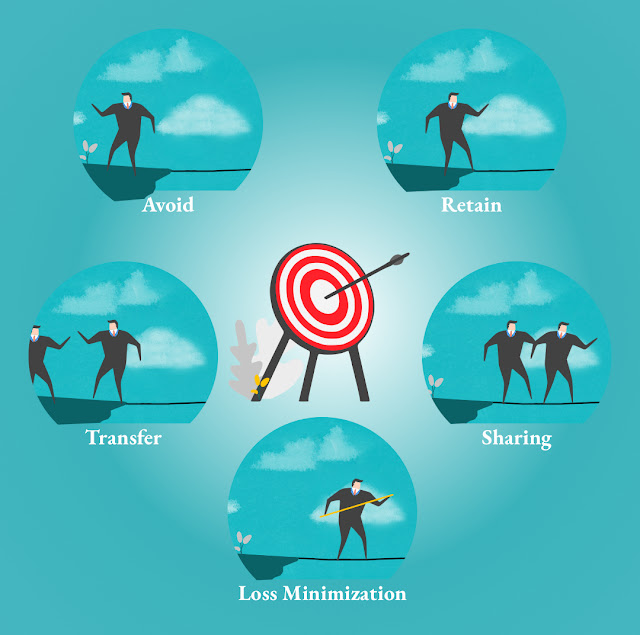
Man is what he possesses. And Leonardo da Vinci once said, ‘He who possesses most be must afraid of losses.Modern trade has been established on the principle of ownership of property. And thus when a property loses value, owner of the property suffers loss.
Man is what he possesses. And Leonardo da Vinci once said, ‘He who possesses most be must afraid of losses.
Modern trade has been established on the principle of ownership of property. And thus when a property loses value, owner of the property suffers loss.
Every living organism lives with risk of such potential loss.
Question is, what we do with such risk of having potential loss.? & Answer lies on our own genetic construction to manage such risks.
Bold organisms having no choices would retain the risk and sustain losses,
Risk averse organisms would try and avoid risks and,
Smarter organisms would use their intelligence and use Risk Management techniques of Sharing, Transferring, Loss Prevention or Reduction of Risks
In no ways any of the above 5 risk management techniques are good, bad or ugly. The word ‘organism’ used herewith is to depict, we the superior race, The Humankind are not the only ones suffering from risk or potential loss, Every kind on this planet and the other holy planets beyond our reach, one or the other ways suffers from risk… yeh to vidhi ka vidhaan hai…
Before we go further, let’s have a short glimpse of 5 risk management terms we may often encounter in our life.
What we can do with Risk.
- Avoidance means not participating in activities that could harm us; In this pandemic situation, this technique is the most suited one, Be at home, Avoid venturing outside without acute reasons, Wear masks, Avoid handshakes, etc.
- Retention is actually an acceptance of occurrence of certain risks or events, and again taking example of pandemic, few bold or rather extra bold tribe ventures outside, continue with their businesses and says, Jo hona hai woh hona hi hai….OR, honi ko kaun taal sakta hai
- Sharing risk as the name suggests is an activity where all alike share their risks by considering reduction of losses for every participant. Probably the phrase is quite apt here, dukh batne se kum hota hai aur sukh batne se badhta hai…
- Transferring risk is the most intelligent risk management technique wherein if there is a potential loss, it would be made good by someone else so that the owner of property will have a peace of mind. Such ‘someone’ would of course charge some fees for making good for such loss in case, owner of the property suffers loss. Chit bhi meri, pat bhi mera…Heads or Tail, I win…
- Loss prevention and reduction are used to minimize risk, not eliminate it. This is why, we all get our cars serviced, wash vegetables before consumption, built dams and so on…
From our childhood days, we all have been taught four risk management techniques of Avoiding, Retaining, Sharing & Reduction, however no school books or our parents guided us, How to Transfer risks and thus, this might be the primary reason that most of us don’t reach Financial Independence stage in Financial Hierarchy of Needs.
Let’s uncomplicate our beautiful lives and ponder on the concept of Transfer of Risks and live happily ever after…
We acknowledge that transfer of risks allows us to pass on the risk to some one who will make us good for the loss during any eventuality at a certain cost. This entire process is termed as Insurance.
Insurance is the most sophisticated way of managing risks. When you buy insurance, you transfer the cost of a potential loss to the insurance company in exchange for a fee, known as the premium. Insurance companies invest the funds securely, so it can grow, and pay out when there’s a loss which is called as ‘claim’.

Insurance helps you:
- Own a home, because mortgage lenders need to know your home is protected. It covers you for repairs and replacement of any damage that’s covered in your policy. It provides protection against theft, damage from perils like fire and water, and financial responsibility that could result from a visitor or guest being accidentally injured on your property.
- Drive vehicles, because few people could afford the repairs, health care costs and legal expenses associated with collisions and injuries without coverage. Auto insurance is also a legal requirement.
- Maintain your current standard of living if you become disabled or have a critical illness. It covers your day-to-day costs and larger expenses like your mortgage while you focus on your health and recovery.
- Cover health care costs like prescription medicines, dental care, vision care and other health-related items.
- Provide for your family in the event of a death. There are life insurance options for short and long-term needs that protect your family’s home, mortgage, lifestyle and the cost of post-secondary education for children.
- Run a small business or family factory by managing the risks of ownership. Get owner, business and employee coverage, and provide group benefits and retirement plans for employees.
- Take vacations without worrying about flight cancellations or emergency medical expenses abroad.
Take the time to review your insurance policies and contact one of your Financial Advisors to answer your questions or get advice. A little knowledge can make a big difference when it comes to buying the right insurance to help protect what matters most for you and your family.
Once we are convinced with the concept of Insurance, we need to combine this idea with our earnings. Every time a wise guy tries to share his thoughts on Insurance, a common man always replies, amdani athanni, kharcha rupayiya…itna bachta hi nahi to insurance ke baare me kahan se soche…
A common man of India does not earn enough to ever think of Insurance…
Now how to solve this complicated puzzle and make our lives beautiful?
Income does not make us a rich man, its what we do with our income makes us rich…
Income can be defined as money received regularly from work, employment, business or investments.
Few, in the hierarchy of needs, reach to the level of financial independence where their Income is derived from their investments and they actually don’t need to work.
To reach this Financial independence level, one needs to create Investments and at the same time Insure their assets, self and family both at the same time.
Income has mainly three components: Tax, Discretionary spending & Savings…

Taxman is like God, or rather Taxman is God. My grandmother was an ardent devotee of Lord Krishna and we could not eat food before it’s served to the lord. I could not understand this before I started earning wherein, I was told my CTC was x and my take home was y, and x-y = tax which was deducted before I could enjoy my hard earned 30/31 days sweat full income.
Disposable Income is the remainder of Income post deduction of Tax. In Americas or developed nations, due to social security system most of the youngsters spend their entire disposable income well before completion of the week/ month and thus turn hand to mouth and depend on government welfare funds. On the other side there are many smart individuals who utilize their disposable income wisely to create wealth.
In our country we often crib about not possessing enough disposable income. If so, we need to always find ways to increase our disposable income to not only meet two ends but to generate enough to create wealth for financial independence. And thus, its always advisable to create Secondary Income or a source, other than our regular job, business which can cushion us during pay cuts, loss of job, recessions, etc.
Disposable income has two components, discretionary spending and Savings.
World bank identifies 12 consumption sectors where any individual spent their discretionary income.
Let’s check on the items included under 12 Consumption sectors
Food
- #1. Food & Beverages: Items included in this category are rice, cereal, flour, bread, bakery, meat, poultry, milk & its products, edible oils, fruits, vegetables, groceries, water, soft drinks, juices, spirits, wine, beer, take home orders etc.
Clothing
- #2. Clothing & Footwear: Items included in this category are garments, footwears and their repair work etc.
Shelter
- #3. Housing: Items included in this category are actual rent paid, imputed rent, house maintenance, purchases like fridge, washing machine, wardrobes, dishwasher, vacuum cleaner, water heater, air conditioning, household tools etc.
- #4. Energy: Items included in this category are electricity bills, cooking gas bills, other domestic fuels like coal, coke, kerosene etc.
- #5. Other: Items included in this category are purchase of home furnishing, household repairs, electric appliances, utensils, tools, non-durable goods (like soaps, washing powder etc.), domestic help, laundry, toys, games, pets, holidays, books, hotels, personal care, other miscellaneous expenses etc.
- #6 Water Utility: Items included in this category are water bills, down-payments, purchasing of associated equipment like water meters etc.
Related Expenses
- #7. Transport: Items included in this category are purchase of car, bikes, bicycles, maintenance, fuel, cost of parking, cost of public transportation etc.
- #8 Health: Items included in this category are doctor’s consultation, laboratory tests, medicines, medical equipment, paramedic services, hospitalization expenses among others.
- #9 ICT (Information & Communication Tech): Items included in this category are purchase of telephones/mobiles/television/computers, payment of their recurring bills, repair of these equipment, purchase etc.
- #10 Education: Items included in this category are books, tuition fees, stationaries, catering, transportation, hostel fees etc.
- #11 Financial Services: Items included in this category are insurance products, investment fees (like brokerage, fees etc.), loan EMI’s, bank charges etc.
- #12 Personal Care: Items included in this category are items of hair care, dental hygiene, make-up, bathing products, towels, napkins, cotton etc.
This data is shown here just to depict the spending pattern of Indians compared to that of BRICS and Other developing countries.
|
|
Consumption Sectors |
India% |
Developing Countries% |
BRICS% |
|
Food |
Food & Beverages |
44.70 |
40.79 |
31.06 |
|
Clothing |
Clothing & Footwear |
6.00 |
6.05 |
7.36 |
|
Shelter |
Housing |
12.50 |
10.72 |
11.80 |
|
Others |
9.70 |
10.85 |
12.86 |
|
|
Energy |
8.00 |
5.12 |
5.08 |
|
|
Water Utility |
0.20 |
0.95 |
0.70 |
|
|
Related Expenses |
Transport |
5.20 |
12.20 |
12.90 |
|
Health |
4.50 |
4.13 |
4.96 |
|
|
Education |
3.50 |
2.38 |
3.76 |
|
|
ICT |
3.30 |
3.26 |
4.86 |
|
|
Personal Care |
2.40 |
2.00 |
1.42 |
|
|
Financial |
Financial Services |
0.00 |
1.55 |
3.24 |
 |
| Consumption Sectors Comparison |
Data sharply depicts that We Indians have a long way to go before we reach Financial Independence status as we hardly spent our Income or time on Financial services.
Third but most important component of Disposable income is Savings/ Investments.
I like to present excellent Quotes by Warren Buffett
On Income: “Never depend on single income. Make investment to create a second source”.
On Spending: “If you buy things, you do not need, soon you will have to sell things you need”.
On Savings: “Do not save what is left after spending, but spend what is left after saving”.
These three lines are like golden rules on what we do with our Income, and Savings should always come first which will lead us to financial independence.
Savings and Investments are always confused and used interchangeably however both have different connotations.
Saving is setting aside money you don’t spend now for emergencies or for a future purchase. It’s money you want to be able to access quickly, with little or no risk, and with the least amount of taxes. Financial institutions offer a number of different savings options.
Investing is buying assets such as stocks, bonds, mutual funds or real estate with the expectation that your investment will make money for you. Investments usually are selected to achieve long-term goals. Generally speaking, investments can be categorized as income investments or growth investments.
I came across a great quote which signifies my point here, which says, “Poor people see a dollar as a dollar to trade for something they want right now. Rich people see every dollar as a ‘seed’ that can be planted to earn a hundred more dollars … then replanted to earn a thousand more dollars.”
When you check on the evening news and see reports that the stock market had a great day, do you find yourself wishing you were investing? If so, you’re probably not alone. According to research, only about 3.7 percent of Indians invest in the stock market.
Consider this …
If you deposited Rs. 10,000 in a savings account at 3 percent annual interest, it would grow to Rs. 16000 in 20 years (before taxes). The same Rs. 10,000 invested in a stock mutual fund earning an average 10 percent a year would grow to 67,275 in 20 years (before taxes).
We will discuss on Investments and its opportunities in great length, in some other blog, however just to end my blog, I would like all of you to please check on the below diagram of Income distribution, wherein Risk Transfer/ Insurance is the foremost & Savings/ Investments the second most priority before we engulf ourselves on discretionary spending.

Leave you with a famous song, sung by Late Shri Kishore Kumar in his film released in 1954, still so apt and relevant in today’s world…Happy Financial Independence…
Din hai suhaana aaj, pahalee taarikh hai
Khush hai jamaana aaj, pahalee taarikh hai
Bivee bolee ghar jara jaldee se aana, jaldee se aana
Shaam ko piyajee hame cinema dikhaana, hame cinema dikhaana
Karo naa bahaana, aaj pahalee taarikh hai
Kisne pukaara ruk gaya baabu
Lalaji kee jaan aaj aaya hai kaabu aaya hai kaabu
O paisa jara laana laana laana
O paisa jara laana aaj pahalee taarikh hai
Khush hai jamaana aaj, pahalee taarikh hai
Banda bekaar hai, kismat kee maar hai
Sab din ek hai roj aitbaar hai
Mujhe naa sunaana han sunaana sunaana
Mujhe naa sunaana, aaj pahalee taarikh hai
Khush hai jamaana aaj, pahalee taarikh hai
Daftar ke saamane aaye mehmaan hain
Bade hee sharif hain puraane meharbaan hain
Are jeb ko bachaana bachaana bachaana
Jeb ko bachaana, aaj pahalee taarikh hai
Khush hai jamaana aaj, pahalee taarikh hai
Dil bekaraar hai, soye nahee rat se
Sethjee ko gham hai kee paiso chalo haath se
Are lutega khajaana khajaana khajaana
Lutega khajaana, aaj pahalee taarikh hai
Khush hai jamaana aaj, pahalee taarikh hai
Ai sinemawaalo aao aao khel majedaar hai
O khel majedaar hai, jee khel majedaar hai
Aaga hai bhagvaan hai, kishor kumar hai
Nimmi gita bali hai, ashok kumar hai
Naragis, raj kapur hai, dilip kumar hai
Gito kaa tufaan hai, naach kee bahaar hai
Paanch aane kaa das aanaa
Are vaapas nahee jaana jaana jaana
Vaapas nahee jaana, aaj pahalee taarikh hai
Khush hai jamaana aaj, pahalee taarikh hai
Miljul ke bachcho ne baapu ko ghera
Kahate hain saare kee baapu hai meraa
Khilaune jara laana, aaj pahalee taarikh hai
Khush hai jamaana pahalee taarikh
#motivation2insure #getinsured
Keyur Gandhi
Clarion Insurance Broking Services Pvt. Ltd.
M: +91 98254 04014, +91 99308 74014