Event Insurance: Your Shield Against Setup and Handling Damage When Equipment Takes Centre Stage

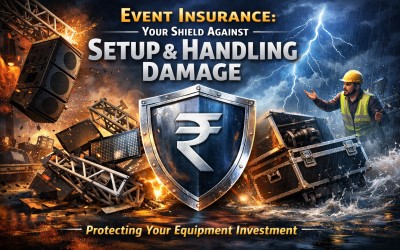
Every event professional knows the anxiety of watching expensive equipment being manoeuvred into position. Whether it's a sophisticated sound system worth hundreds of thousands of rupees, intricate lighting rigs, or elaborate staging structures, the setup phase represents one of the highest-risk periods in event management.
A single misstep during installation, a dropped speaker cabinet, a collapsed truss, or a toppled LED wall can derail an entire production and devastate budgets. The irony is stark: the very equipment meant to create memorable experiences becomes most vulnerable during the moments when it's being positioned to deliver that magic.
Set up and handling risks aren't merely theoretical concerns but daily realities for event organisers, technical crews, and production companies. From loading docks to final positioning, each transition point introduces potential for damage, malfunction, or complete equipment failure.
Understanding how event insurance addresses these setup handling risks isn't just prudent risk management—it's essential for anyone whose events depend on sophisticated technical infrastructure.
The Setup Risk Landscape
Equipment damage during setup and handling occurs more frequently than many organisers anticipate, arising from several common scenarios:
l Transportation incidents– Damage during loading, unloading, or transit between storage and venue
l Installation accidents– Equipment drops, improper rigging, or structural failures during assembly
l Human error– Incorrect handling techniques, inadequate training, or communication breakdowns amongst crew members
l Environmental factors– Weather exposure during outdoor setup, temperature fluctuations, or unsuitable venue conditions
l Space constraints– Tight access points, inadequate loading areas, or challenging installation environments
The Financial Exposure
The costs associated with equipment damage extend well beyond simple repair bills. High-end sound systems, professional lighting rigs, and staging equipment represent significant capital investments, often ranging from thousands to lakhs of rupees for large-scale productions.
When damage occurs during setup, organisers face immediate decisions with financial implications. Emergency replacement rentals command premium rates, particularly when sourced at short notice.
Repair costs for sophisticated equipment often prove surprisingly high, with specialised components requiring expert technicians and extended lead times. If the damage prevents event execution, there's potential liability exposure to clients, attendees, or other stakeholders.
For equipment owners, damage during client events creates additional complications around depreciation, replacement value disputes, and potential loss of future rental income while equipment remains out of service.
How Event Insurance Responds
Comprehensive event insurance addresses setup and handling risks through targeted coverage mechanisms:
l Equipment Damage Protection
Policies cover accidental damage to owned or hired equipment during the setup, event execution, and breakdown phases. This includes sound systems, lighting rigs, staging, video equipment, and associated technical infrastructure.
l Hired Equipment Coverage
When organisers rent equipment, insurance protects against their liability for damage during the event period, covering repair or replacement costs that would otherwise be their responsibility under rental agreements.
l Installation Liability
Coverage extends to damage caused during the installation process, protecting organisers when setup activities inadvertently cause harm to venue property or other equipment.
l Emergency Replacement Costs
Some policies include provisions for emergency equipment hire when owned or originally hired equipment becomes unusable, helping maintain event continuity despite damage.
Practical Coverage Scenarios
Let’s assume, a corporate event features a ₹2,00,000 audio-visual setup. During installation, a lighting truss collapses due to improper rigging, damaging multiple LED panels and sound speakers. Event insurance covers the repair costs and emergency rental fees for replacement equipment, preventing what could have been a six-figure loss.
Similarly, a music festival's main stage sound system can suffer water damage during overnight setup if unexpected rain penetrates temporary weather protection. In this scenario, the insurance policy covers both the equipment repairs and the costs of securing replacement speakers for the opening day, ensuring the event proceeds as planned.
For a product launch, if the hired projection equipment is accidentally dropped during installation, it can be rendered inoperable. The organiser's event insurance covers their liability to the equipment owner for repairs, plus emergency rental costs for substitute equipment.
Key Coverage Considerations
When evaluating event insurance for equipment protection, organisers should examine:
l Coverage limits– Ensuring policy limits match the total value of equipment at risk
l Deductibles– Understanding excess amounts and how they apply to equipment claims
l Coverage period– Confirming protection extends throughout setup, event, and breakdown phases
l Equipment definitions– Verifying all relevant equipment types are explicitly covered
l Geographic scope– Ensuring coverage applies during transportation and at various venue locations
l Exclusions– Understanding what damage scenarios aren't covered, such as gradual deterioration or intentional acts
Risk Mitigation Complements Insurance
While insurance provides essential financial protection, combining coverage with proactive risk management delivers optimal results. Proper crew training and certification reduces handling errors. Detailed load-in schedules with adequate time prevent rushed installations.
Equipment inventories with condition documentation establish baseline states. Weather monitoring systems enable protective measures during outdoor setups. Regular equipment maintenance identifies potential failures before critical events.
Professional rigging inspections and adherence to manufacturer guidelines ensure safe installation practices, while comprehensive site surveys identify potential hazards before equipment arrives.
Setup and handling represent the moment when planning meets physical reality, and when equipment investment faces its greatest vulnerability. Damage during installation and breakdown isn't an exceptional occurrence but a predictable risk that requires systematic protection.
Event insurance transforms this exposure from a potentially catastrophic financial event into a manageable cost of doing business. For organisers investing in sophisticated technical production, the question isn't whether equipment might be damaged during setup, but rather how that inevitable risk will be financed when it occurs.
Insurance provides the answer, ensuring that dropped speakers, collapsed rigging, or transit damage don't translate into unrecoverable losses. In an industry where technical excellence defines success, protecting the equipment that delivers that excellence isn't optional—it's foundational to sustainable event management.